
Let’s talk about that one group project where two kids do everything, one pretends to help, and one mysteriously disappears into their hoodie.
You know the one.
Now imagine the opposite. A classroom where every student is up, thinking, solving, and actually participating… even the quiet ones. Even the I-don’t-do-group-work ones. That’s the magic of the science escape room strategy I swear by.
And before you panic, no, this isn’t the over-the-top, Pinterest-core escape room with black lights and $50 worth of props. I like my learning fun, structured, and doable.
Here’s how I make it work (and make it work for everyone).
Step 1: Design Roles with Purpose
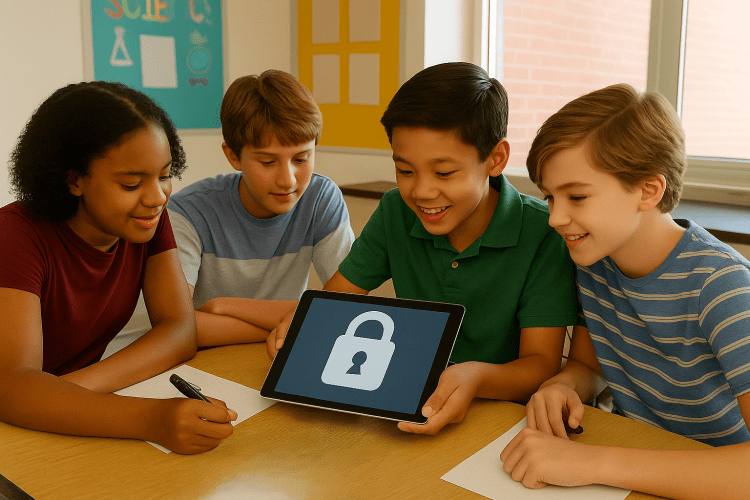
The key to full-class engagement? Built-in jobs. Every team of 3–4 students gets:
- Information Technologist (records codes and information onto the device)
- Chief Communicator (relays information between the team and the teacher. Ensures every teammate has a voice)
- Lead Detective (motivates team and manages conflict)
- Document Manager (records all answers on student recording sheet)
These aren’t optional. I assign them, or better yet, students draw cards at random. Suddenly, everyone’s accountable. No more group freeloaders. Grab the Escape Room Extras that include job roles, certificates and escape room photo props.

Step 2: Use Digital Locks (a.k.a. My Favorite Low-Prep Hack)
I love using Google Forms with response validation to create digital lockouts. Each correct answer “unlocks” the next station.
Students don’t need logins. No tech headaches. Just one device per group and bam—escape room energy without real locks or crying in the copy room.
Bonus: Google timestamps who solved what, so if a group finishes in 10 minutes, I can high-five them… or double-check they weren’t just guessing.
Step 3: Build those Social Skills
Each group has the same mission: “Escape” by solving science clues tied to our current unit, but the social skills they practice are just as important!
Escape rooms build
- Collaboration (discuss what working in a group looks like)
- Critical Thinking (have your students think outside of the box to crack puzzles… and its okay to not succeed right away!)
- Communication (model how groups listen and share information)
No one’s just sitting there waiting for the smart kid to solve it all. They can’t. They need each other.
Step 4: Reflect… Without Killing the Vibe
After the escape room ends (and the classroom is full of victorious vibes), I sneak in a reflection form:
- What science skills did we use today?
- What was your role? How did you contribute?
- What was one thing you’d do differently next time?
It turns fun into feedback and gives me quick insight into who’s really mastering the content.
Why This Works (Even for the Reluctant Learners)
Escape rooms tap into what middle schoolers secretly love:
- Solving puzzles
- Friendly competition
- Doing something different
But when the structure is there (clearly defined jobs, meaningful tasks, and built-in accountability) it becomes way more than just a fun day. It becomes real science learning with zero passengers.
And let’s be honest: when everyone is involved, you get to walk around actually facilitating instead of playing whack-a-mole with group drama.
Ready to Try It?
If you want a shortcut, grab one of my EzPz Science Escape Rooms and Escape Room Extras. They’re built for real classrooms with real students (and teachers who value their sanity).
Or try your own using the strategy above. Either way, you’ll be shocked at how much every single kid can show up when you structure it right.
Read more about the Science Behind Escape Rooms and 3 Things you are doing Wrong in your Escape Room.
Let the escaping (and learning) begin.





 ezpz-science.com