Ah, reflection. That magical moment when students pause, process, and connect the dots… or at least that’s what it’s supposed to be.
But let’s be real… ask a middle schooler to “reflect,” and you’ll get either a blank stare, an eye roll so dramatic it deserves an Oscar, or a sentence that says something like “I learned about science.” (Thanks. Super helpful.)
Still, I believe in the power of reflection. When done right, it helps students take ownership, build metacognition, and grow from more than just right/wrong answers. So over the years, I’ve found a few sneaky, structured, and actually engaging ways to get them to reflect (without triggering the drama).
1. The Exit Ticket Trick
Instead of the vague “What did you learn today?”, I ask:
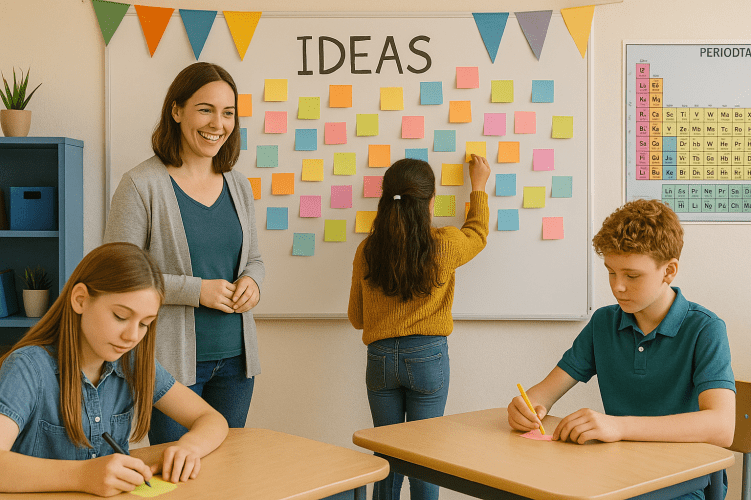
- What surprised you today?
- What felt confusing?
- If today’s lesson were a meme, what would it be?
Middle schoolers LOVE this kind of spin. The key? Specific, low-pressure, and a little fun.
2. Reflection + Movement = Win
I turn reflections into gallery walks, 4-corners activities, or partner shares. Example: “Stand by the poster that best represents how confident you feel about today’s lab.” They move, talk, and think without realizing it’s reflection.
3. Use Their Own Work
I hand back a past quiz or assignment and say: “Highlight one thing you’re proud of and one thing you’d change. Then write a tip for a student who hasn’t done this yet.” That tiny shift turns reflection into mentorship, and they eat it up.
4. Digital Reflections with Flair
Padlet, Flipgrid, Google Forms… I rotate tools and give options like emojis, voice notes, or gifs to explain their learning. Yes, gifs. If a student uses a SpongeBob gif to explain how friction works, I call that a reflective win.
5. Keep It Short and Sweet
I’ve learned not to overdo it. 1–2 prompts, 5 minutes max, and always a chance to share or celebrate a few responses. When students know their voice matters, and that we won’t just toss their reflection in the recycle bin, they take it seriously (or at least less begrudgingly).
Bottom line?
Reflection doesn’t have to be a groan-fest. With a little structure, a dash of creativity, and a lot of student voice, we can turn it into something that actually sticks.