Gratitude activities can feel… a little too elementary for older students.
But that doesn’t mean you should skip them.
It just means you need to adjust how you do them.
1. Keep It Simple and Low-Key
Avoid anything that feels forced or overly cutesy.
Instead:
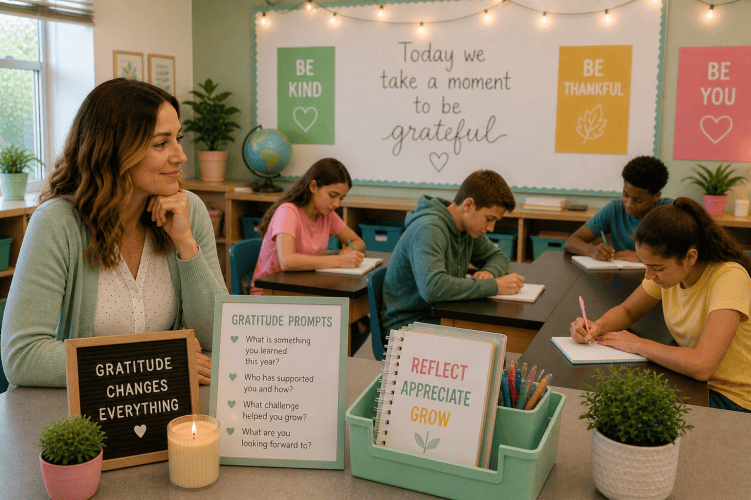
- Quick reflections
- Short writing prompts
- Subtle discussions
2. Make It Relevant
Connect gratitude to real life.
Try:
- Appreciating a learning opportunity
- Recognizing personal growth
- Reflecting on challenges overcome
3. Give Students Choice
Not every student wants to share publicly.
Offer options:
- Write privately
- Share with a partner
- Participate in discussion
4. Tie It Back to Your Classroom
Gratitude can build classroom culture.
Focus on:
- Respect
- Support
- Community
Final Thought
Gratitude doesn’t have to be big to be meaningful.
Sometimes the simplest reflection makes the biggest impact.