
Group work in middle school science sounds great… in theory. Collaboration! Communication! Peer learning! But anyone who’s actually handed out a group task to a room full of hormonal humans knows how quickly “teamwork” can turn into chaos.
Over the years, though, I’ve found a way to make lab teams, table jobs, and group work not only tolerable, but shockingly effective. Here’s how I make it work without losing my mind (or my voice).
Step 1: The Power of Assigned Roles
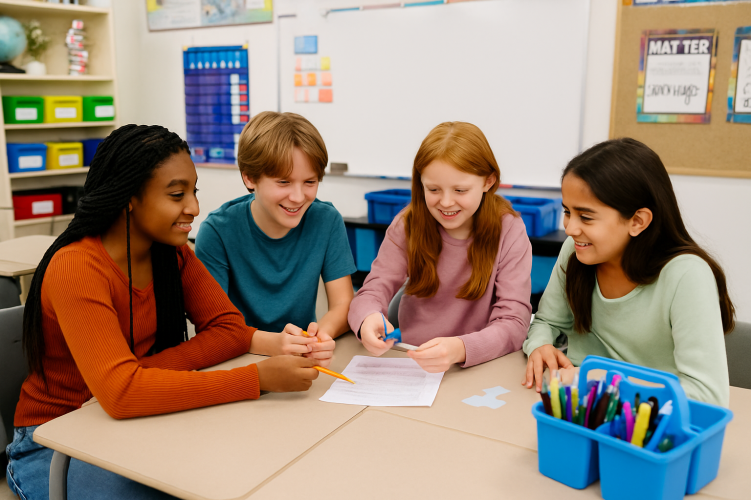
Random group chaos? Not here. Every group gets assigned roles before anything hands-on begins. I use four core jobs in science lab teams:
- Team Leader – directs the team to accomplish task
- Materials Manager – collects needed resources for the team
- Communications Manager – relays information to and from the teacher and the team
- Time Manager – makes sure everyone is on task
I rotate jobs weekly, so no one is stuck being the bossy one or the quiet one forever. These roles give students structure, purpose, and a reason not to argue over who touches the microscope first.
Step 2: Visual Reminders for the Win
Each lab table gets a job chart with names and roles clearly displayed. I also add a quick visual (icon or color) so students can easily remember who’s who. This means fewer “Wait… what am I again?” interruptions—and more actual learning.
Pro tip: Laminate your table charts and use dry-erase markers so changes are easy peasy.
Step 3: Practice Before the Real Deal
Before I unleash students into a full-blown lab, we practice the roles. We walk through what it should look like, what it shouldn’t look like (cue dramatic reenactments), and we talk through why each role matters.
This investment up front pays off BIG when it’s time for the real science.
Step 4: Group Work ≠ Group Grade
I give individual grades, even for group tasks. Why? Because accountability matters. Just because one student is in charge of recording doesn’t mean the others don’t need to know what’s going on.
Sometimes I’ll have students submit individual reflections, check for understanding with exit tickets, or do a quick spot quiz post-lab. It keeps everyone engaged (and prevents freeloading).
Step 5: Celebrate Collaboration
I don’t just grade the science, I acknowledge the teamwork. A “Lab Team of the Week” shoutout, stickers for rockstar collaboration, or a simple note saying “Loved how you kept your group on task today” can go a long way. Middle schoolers might roll their eyes, but trust me… they eat it up.
Final Thoughts
Lab teams and group work used to feel like an exhausting gamble. But with a few smart routines and a focus on structure, it’s now one of my favorite parts of teaching. I get to see students take ownership, support each other, and grow in ways that solo work just doesn’t allow.
Want something ready-made? Grab the EzPz Science Lab Teams/ Group Work Job Roles here.





 ezpz-science.com